
Treasure Beach is the part of Jamaica most visitors never see. It sits on the south coast, three hours from the airport, with no resorts, no cruise terminal and no one trying to sell you anything on the sand.
We live and host here, in Billy’s Bay. This is what the place is actually like, and how to plan a trip.
What Treasure Beach actually is
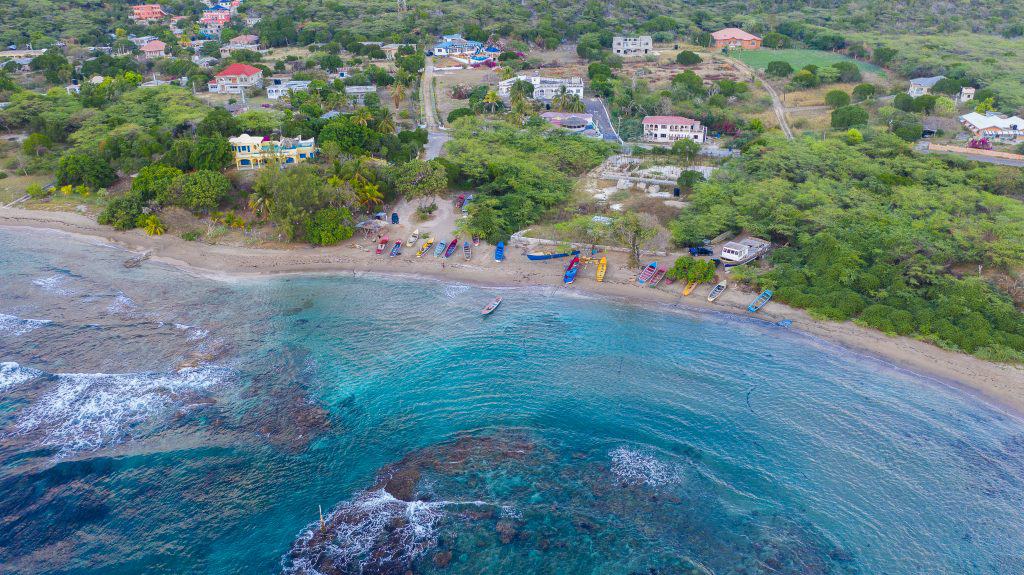
It is not one beach. Treasure Beach is a six-mile stretch of the Saint Elizabeth coastline made up of four fishing coves:
- Billy’s Bay — the westernmost and quietest, mostly villas and long stretches of empty sand
- Frenchman’s Bay — the closest thing to a village centre, with restaurants, bars and shops
- Calabash Bay — home to the Calabash International Literary Festival
- Great Pedro Bay — the eastern end, quiet again
The sand here is not the powder-white of the north coast. It is darker, coarser, and the water can have a swell. What you trade in postcard perfection you get back in having the beach to yourself.
The beaches, and swimming
These are working fishing beaches before they are anything else. Pirogues are pulled up on the sand, nets are mended in the shade, and boats leave before dawn. It is a landscape people use rather than a resort strip.
A word on swimming. The sea here can have a real swell and a strong undertow, particularly at the western end, and there are no lifeguards anywhere along the six miles. On calm days it is wonderful. On rough days it is genuinely not safe for weak swimmers, and children should not be in the water unwatched. Ask locally — anyone who lives here will tell you honestly what the sea is doing that week.
Frenchman’s Bay and Calabash Bay are generally the most sheltered. Many visitors staying at villas do most of their swimming in a pool and use the sea for walking, watching and the occasional calm-day dip.
How it differs from the rest of Jamaica
Ninety percent of visitors to Jamaica go to Montego Bay, Negril or Ocho Rios. Treasure Beach is on the opposite coast, and it developed differently.
There are no all-inclusives. Almost every business is locally owned. Tourism arrived slowly enough that the community shaped it rather than the other way round, and there is an established local philosophy of keeping it that way.
Practically, that means nobody hassles you on the beach, prices are not inflated, and the people you meet are generally not working an angle. It also means there is no nightlife to speak of, limited shopping, and if you want a swim-up bar with a DJ you will be disappointed.
The other difference is weather. The Santa Cruz Mountains block much of the rain that hits the north coast, so this is the driest, sunniest corner of the island.
A short history
Treasure Beach grew as a fishing settlement, and fishing still shapes it. The boats here work the Pedro Banks, a shallow shelf some fifty miles offshore, and crews have historically gone out for days at a time. It is demanding work, and it produced a community with a reputation across Jamaica for self-reliance.
Farming matters too. Saint Elizabeth is known as the island’s breadbasket, and the dry, sun-baked land around Treasure Beach is worked hard for melons, onions, scallion and tomatoes, often without irrigation.
There is a long-standing local story that the reddish hair and lighter eyes seen in some Treasure Beach families trace back to shipwrecked Scottish sailors. It is repeated often and treated fondly, though it has never been established as fact. Either way, the area has a distinct identity that residents are proud of.
Tourism came late and stayed small, largely by choice. Community organisations have pushed for development that keeps ownership local, and it is the main reason the place still feels like a village rather than a destination.
Things to do
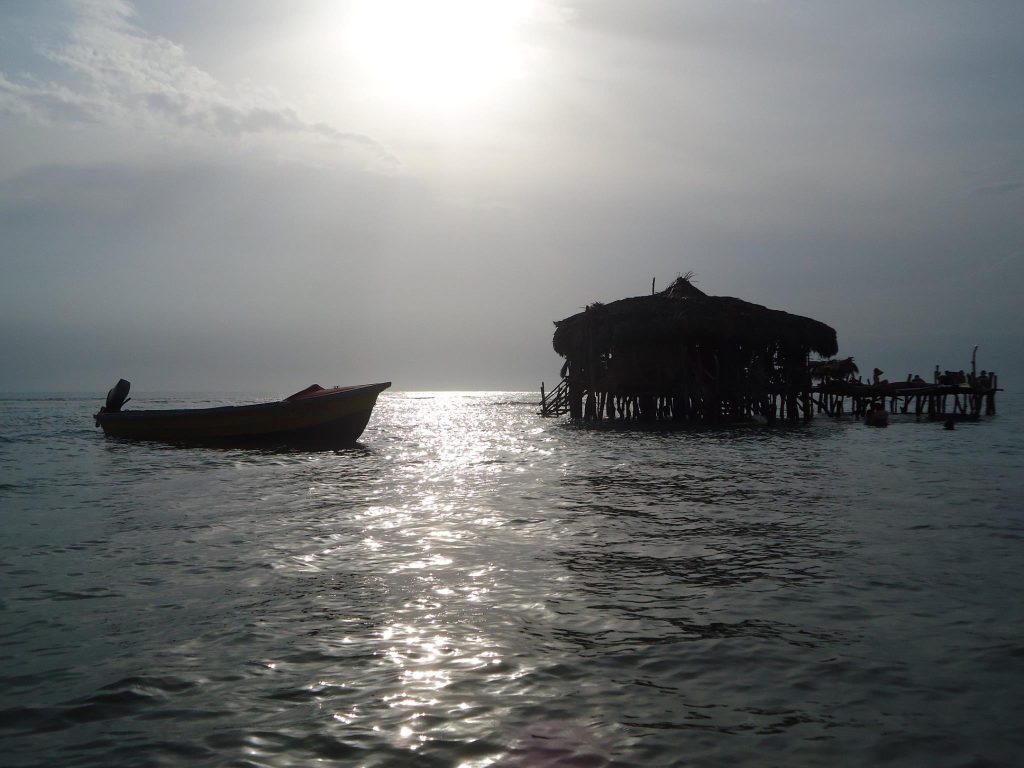
- Floyd’s Pelican Bar — a driftwood bar on stilts, standing on a sandbar out at sea. Reached only by boat. The single most memorable thing in the area.
- Black River Safari — mangrove channels with crocodiles and egrets, about an hour east.
- YS Falls — seven waterfalls with natural pools, a rope swing and a zip line.
- Lovers Leap — a 1,700-foot cliff with a lighthouse and a view down the entire coastline.
- Appleton Estate — rum distillery tour, a scenic drive inland.
- Doing very little — genuinely the main activity, and the reason most people return.
See our full attractions guide for more detail.
Eating and drinking
Jack Sprat in Calabash Bay is the best-known spot — pizza, seafood, and a beach terrace. Jakes Hotel next door has a restaurant open to non-guests.
Beyond that, expect small local establishments serving fried fish, jerk chicken, curry goat and festival. Portions are large, prices are reasonable, and service runs on island time.
If you are staying at a villa with a chef, most guests eat in more than they expect to. Fish bought that morning from the fishermen on the beach is hard to beat.
Practical things worth knowing
- Money — Jamaican dollars are the currency, and US dollars are widely accepted. Banking facilities in Treasure Beach itself are limited, so it is sensible to arrive with cash and top up in Santa Cruz or Black River rather than relying on finding a machine locally.
- Groceries — small shops cover the basics. For a proper supermarket shop, Santa Cruz is the nearest town of any size, roughly forty minutes inland.
- Drinking water — see our FAQ on whether the water is safe to drink.
- Connectivity — mobile signal is generally good and most accommodation has wifi, though speeds vary and outages happen. It is workable for remote work, but do not plan a critical video call without a backup.
- Power — 110V, US-style plugs. Brief outages are not unusual.
- Medical — there is a health centre locally; the hospital is in Black River. Bring anything you specifically rely on rather than expecting to buy it here.
- Insects — mosquitoes are present, particularly at dusk. Repellent is worth packing.
Getting here
Fly into Sangster International (MBJ) in Montego Bay — roughly 2.5 to 3 hours by road. Kingston (KIN) is a similar distance but a less pleasant drive.
Options once you land: a private transfer (simplest), a rental car (fine if you are happy driving on the left on rural roads), or route taxis (cheapest, impractical with luggage).
More detail in our FAQ on Jamaica’s international airports.
Getting around once you are here
The four coves stretch over about six miles, so you will want some way of moving between them.
- A driver — the most common approach. Most villas and guesthouses have someone they use, rates are agreed in advance, and it removes any stress about roads at night.
- Route taxis — shared cars running fixed routes, very cheap, and a genuine slice of local life. Flag one down and say where you are going.
- A rental car — worthwhile if you plan several day trips. Driving is on the left, main roads are fine, and side roads are rough in places. Avoid driving unfamiliar rural roads after dark.
- Walking and cycling — fine within a cove, hot and long between them.
Distances are short but journey times are longer than the map suggests. Allow more time than you think for anything inland.
When to visit
Temperatures sit between 80°F and 90°F almost year-round. December to April is driest and busiest. May and late November tend to be the best value with weather that is still reliable. Hurricane season runs 1 June to 30 November, though the south coast is less exposed than the north.
One date worth knowing: the Calabash International Literary Festival takes place in Treasure Beach every other year and fills every bed in the area. Book far ahead or avoid it, depending on your taste.
See our full Jamaica weather guide.
For a fuller breakdown, see our month-by-month guide to when to visit Jamaica.
Where to stay
There are no large hotels. The options are boutique hotels such as Jakes, guesthouses, and private villas.
Villas make particular sense here because there is no resort infrastructure to fall back on — having a kitchen, a pool and staff who can arrange tours matters more in Treasure Beach than it would in Negril.
Butterfly Hill is our own villa in Billy’s Bay: five bedrooms, sleeps ten, private chef, infinity pool, beach access at the end of the driveway. You can read about it for families or honeymooners.
For a fuller comparison of hotels, guesthouses and villas here, see where to stay in Treasure Beach. If you have already settled on a villa, we have a separate guide to comparing Treasure Beach villas — staffed versus self-catering, which cove, and what to ask before you book.
What a day here actually looks like
Most people arrive expecting to fill the days and end up doing the opposite.
A fairly typical rhythm: coffee early because the light is good and it is cool; a walk on the beach while the boats come in; breakfast; a stretch of doing nothing much; lunch somewhere local; an excursion every second or third day rather than daily; sunset, which is the event of the day here; dinner in, often fish someone bought that morning.
Guests who try to schedule something every day tend to find it exhausting and slightly beside the point. One or two proper trips — the Pelican Bar, Black River or YS Falls — spaced across a week works better than five in a row.
Is it right for you?
Come to Treasure Beach if you want quiet, real Jamaica, good food, a book, and a beach you do not have to share.
Do not come if you want nightlife, shopping, powder-white sand, or a short airport transfer. Those exist in Jamaica — just on the other coast.
Questions about the area? Ask us — we are happy to help even if you end up staying elsewhere.
Related guides
- Floyd’s Pelican Bar: How to Visit
- Black River Safari: What to Expect
- Renting a Whole Villa for a Family Trip
- A Honeymoon at a Private Villa
- Treasure Beach vs Negril vs Montego Bay
Useful official sources: the Jamaica Tourist Board for island-wide travel information, and YS Falls for opening times and prices.